Mariana Graterol Mariana Graterol

I went to a protest outside Nicolas Maduro’s first federal court hearing in New York in search of comfort, but ended up confronting the Venezuelan homophobia and misogyny I fled from

un resumen

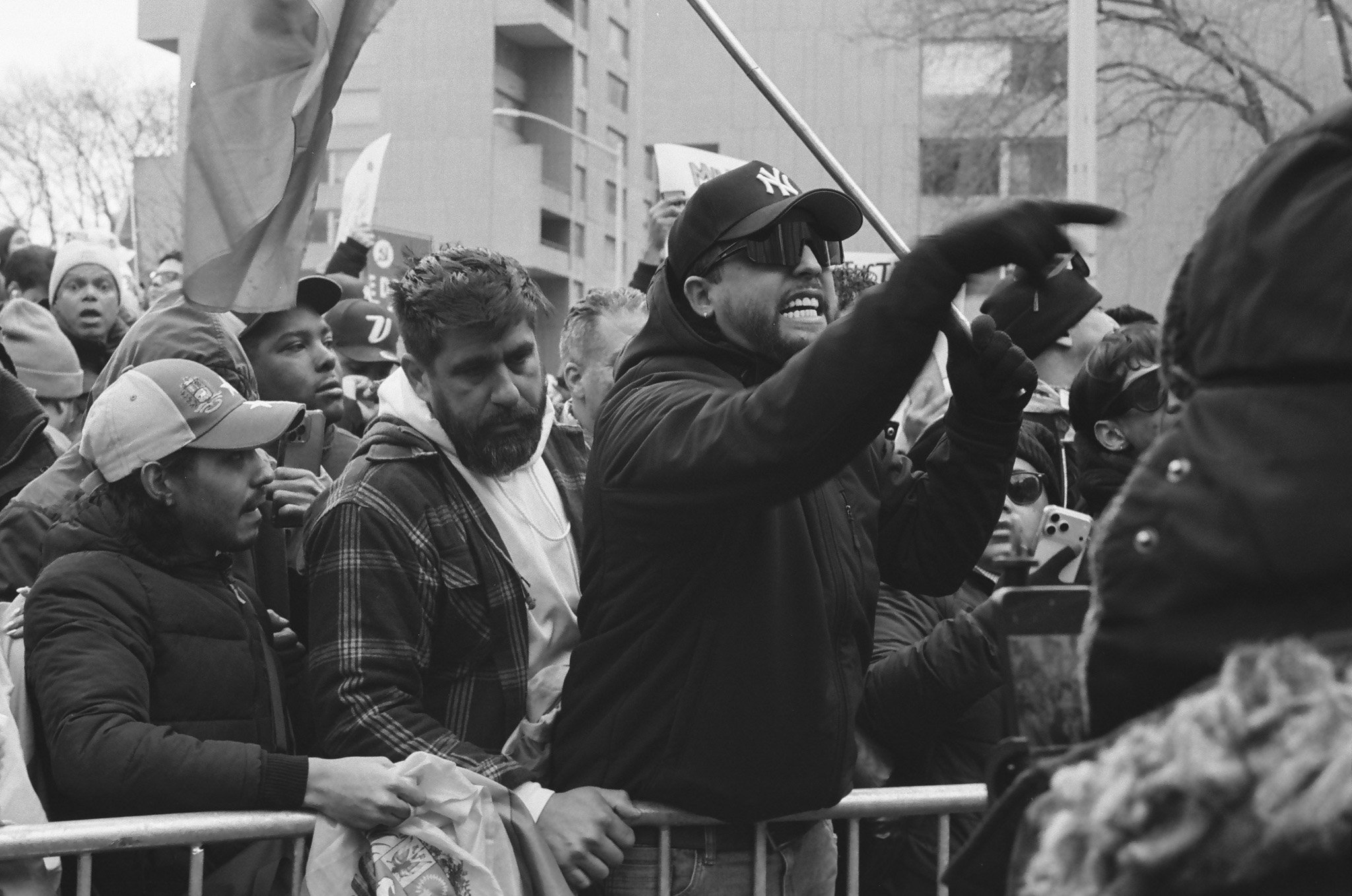
Nicolás Maduro and Cilia Flores’ trial continues on March 26th. Three months ago, at their first hearing, my heart sank as a Venezuelan queer woman when I witnessed how my conationals discredited anti-interventionist protestors by questioning their gender appearance and sexual preferences, not their politics.


Anxiety had been taking over me since the U.S. military strikes in Venezuela on the early morning of Saturday, January 3rd. On Monday, the Venezuelan leaders and now inmates, Nicolas Maduro and his wife, Cilia Flores, were about to face charges for narcoterrorism, drug trafficking, and weapons possession in the U.S. District Court in the Southern District of New York. It felt beyond belief that it was all happening in the city I now call home.

I’d wake up both in awe and in shock after the attack. From my uptown Manhattan room, I would reflect on the messages from my family in Caracas detailing how they gathered in the dark during the explosions, how my cousins’ hands and legs would tremble, and how the house walls would shake. As a Venezuelan immigrant, I would cope with the uncertainty of it all by constantly refreshing, scrolling, and searching for the latest news updates. I would keep the news playing in the background, muting and unmuting the tv when something important seemed to be happening on the screen. 

The thought “Maduro is here” would roam my mind. I now feel consternation of how I savoured the footage of him limping out of the helicopter in handcuffs wearing an inmate khaki uniform and orange shoes —an image worlds apart from ones of him cheering up crowds and dancing on rally stages, of him justifying the killing of citizens by state officials by labeling them as instigators and terrorists, and of him calling for the incarceration of dissidents on national tv. It was this last one that triggered my exit from the country.  

It’s been eight years since I left Venezuela, and almost six since I settled in New York. Nevertheless, I still compare the so-called Caracas’ “eternal Spring” year round weather with the few cool Summer days that the city gifts us, I still commute for more than an hour from Uptown Manhattan to Jackson Heights to eat at my favorite Venezuelan restaurant, and I now cherish my hometown high school friends' achievements, (who have also made the city their home) over coffee in the Lower East Side. It has been through community, within my New Yorker/Venezuelan bubble, that I’ve found the joy of embodying myself not only as an immigrant, but as a queer Latino “alien” in the United States. 

I thought I became an immigrant because of political violence and economic instability, but I’ve come to the realization that I left Venezuela also escaping from a conservative society. Today, the country has no same sex marriage laws, has no formal recognition of the trans community nor of genders outside of the binary, it has one of the most restrictive abortion laws in Latin America, and prides itself over rigid standards of beauty and womanhood. Often, I sit with a paradox: I guard myself from the culture that raised me while finding comfort in Venezuelan traces within myself. 

Instead of spiraling alone in front of the TV, I might as well go downtown, I thought. Maduro’s hearing was set to start at noon, and, since on the evening of January 3rd I went to what turned out to be an exhilarating Venezuelan protest outside of the court, I loaded my 35mm camera, jumped on the subway, and walked out of the Chambers St station in search of my yellow, blue, and red striped flag. 

Just-married couples exiting City Hall, a growing presence of police officers, and stationed media crews led me to the south end of Columbus Park on Pearl St, where, separated by safety metal barriers, the couple-of-nights-before dancing crowd of Venezuelan expats was showing its teeth to anti-interventionist and left-wing protestors that also took part in the streets. I witnessed how our anger and exhaustion as a collective were expressed as yelled slurs against other protestors' manhood, verbal strikes regarding their appearance, and mockery about their gender presentation. My chest tightened. My bubble burst: I was reminded I left Venezuela not only escaping a dictatorship, but running away from a fatigued society that has been forced to prioritize its survival over the questioning of its own values. 

On January 5th, my search for comfort among my conationals turned into a reminder of one of the reasons why I left my country. In the midst of the hope for change, grief, fear, and overall rollercoaster of emotions that the Venezuelan community has endured, I witnessed two of the deepest shadows of our society: homophobia and misogyny. I was reminded that I not only became an immigrant by escaping political violence and economic insecurity, but —something that I probably did not even know in 2017— by searching for the solace of a part of who I am, and I could not be more grateful to New York for providing a space for it.

Read More